NATO Summit in Ankara. Strengthening the Alliance and Ukraine’s Defense
The main event for NATO in 2026 was the Alliance’s summit held on July 7–8 in Ankara. It reaffirmed that the unity of Alliance members remains unwavering and that they adhere to the principles of collective defense. Despite certain challenges, the Alliance remains strong and capable of ensuring its own security. A transformation is currently underway to adapt the Alliance to meet modern requirements. NATO leadership today recognizes Ukraine’s significant role in the European and Euro-Atlantic security architecture. Therefore, Ukraine is receiving assistance to strengthen its defense capabilities.
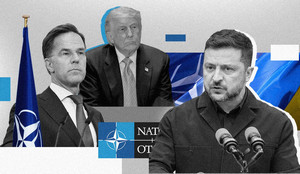
The USA and Europe are joining forces to jointly counter Russia and support Ukraine in the Russia-Ukraine war. This resolves the disagreements between them that arose with Donald Trump’s return to the US presidency early last year. In other words, NATO is restoring its unity and its ability to fully fulfill its functions in ensuring Euro-Atlantic security. Simultaneously, the North Atlantic Alliance is undergoing a transformation in line with the changing global military and political landscape. The USA has returned to Ukraine’s side, while Europe is providing assistance to our country at a qualitatively new level. As for Ukraine, it is strengthening its position as one of the key components of the European and Euro-Atlantic security architecture. This is precisely how we can interpret the Alliance’s current relations and its attitude to Ukraine. This will be confirmed by the NATO summit on July 7–8, 2026, in Ankara and a series of other related events involving Alliance representatives. The summit’s outcomes are already known and are being widely discussed by experts. Therefore, there is no need to repeat them. At the same time, they allow us to summarize assessments and conclusions regarding the prospects for NATO’s development and its interaction with Ukraine. In this regard, the main focus is on NATO’s actions to strengthen European defence and on Ukraine’s role and place in this effort amid the reduction of the USA’s military presence in the European theater of operations. This was precisely the main topic of the NATO summit in Ankara. Most Ukrainian experts sidestep this topic, focusing solely on how NATO will assist Ukraine.
In the ongoing war between Russia and Ukraine, our country’s deepening cooperation with NATO is of paramount importance. Some doubt this, believing that the Alliance is incapable of standing up to Russia. This view stems from problems and internal conflicts within NATO – which have intensified recently – as well as from certain ineffective responses to Russian provocations.
The North Atlantic Alliance is indeed facing certain challenges. But it is adapting in light of the current situation – including with Ukraine’s participation and support. The summit in question confirmed all of this. Its public session and final declaration are revealing, though they are general in nature. They can be supplemented with noteworthy details. It is worth examining them more closely. Let’s start with the well-known issues that define the underlying aspects of NATO’s activities. Indeed, participants at the NATO summit in Ankara clearly identified Russia as the main and long-term threat to Euro-Atlantic security and stability. The reason was also cited: Russia’s aggressive foreign policy and its potential attack on Europe. At the same time, it was acknowledged that the Russia-Ukraine war has shattered peace in Europe and has even become the largest armed conflict since World War II. This position was supported by all NATO members, including the United States, which had previously avoided such strong language. In other words, the North Atlantic Alliance has united completely around the issue of countering Russia, whose hopes for US President Donald Trump and attempts to divide NATO have failed.
NATO allies reaffirmed their unwavering commitment to collective defence in accordance with Article 5 of the North Atlantic Treaty. They also confirmed that the plans and principles for building a new European and Euro-Atlantic security architecture remain unchanged. As is well known, these agreements provide for a redistribution of roles between the United States and Europe – specifically the EU and the European component of NATO – in light of the primary threats to their security. Under this approach, the United States is to focus its efforts on containing China globally and in the Asia-Pacific region in particular. Europe, with American support, is to counter Russia. At this, the USA will continue to be responsible for Europe’s strategic nuclear security alongside the United Kingdom, France, and other Alliance member states that possess nuclear weapons.
These plans are already being implemented in practice. In particular, agreements have been reached to enhance Europe’s role in NATO’s command structures. The United States retains the positions of Supreme Allied Commander Europe, as well as the commanders of Allied Land Command, Allied Maritime Command, and Allied Air Command. It commands the respective branches of NATO’s Allied Forces in the European theater of operations.
As for the United Kingdom, it will assume the position of Commander of NATO’s Allied Command North, while Italy will be responsible for NATO’s Allied Command South. Germany and Poland will take turns leading NATO’s Joint Forces Command in Western, Central, and Central-Eastern Europe. These command structures direct the operations of NATO’s Joint Forces in their respective parts of the European theater of operations.
In connection with the expansion of NATO’s area of responsibility following the accession of Finland and Sweden, the issue of establishing new Alliance command structures in Northern Europe and ensuring their operational readiness was also considered. Today, NATO’s Multi-Corps Land Component Command “Northern Europe” has already been deployed in Finland and has begun operations. The new Command reports to NATO’s Joint Land Command.
Besides, a new NATO Combined Air Operations Center (CAOC) of the NATO Allied Air Forces has been deployed in Norway (in Bude), which reports to NATO’s Allied Air Command. The Center will be fully operational in 2027. It is already participating in military exercises. There are also plans to deploy a new NATO Joint Maritime Command in Northern Europe, which will report to the Alliance’s Allied Maritime Command.
In 2024, NATO leadership adopted a new concept designed to repel a Russian attack on the eastern borders of Alliance member states and prevent Russian forces’ possible breakthrough deep into their territory. Previously, such a scenario was considered possible, but with a subsequent restoration of the situation through counteroffensive operations. However, NATO gave up this tactic after evidence emerged of widespread atrocities committed by Russian military personnel in the occupied territories of Ukraine.
Under this approach, NATO’s forward presence in Central and Eastern Europe, Southeastern Europe, Northeastern Europe, and the Baltic states is being strengthened. A decision has been made to establish a new NATO multinational Rapid Deployment Corps (RDC) in Lithuania, Latvia, and Estonia. Currently, these countries and Poland are covered by the “Northeast” Rapid Deployment Corps. The new Rapid Deployment Corps is being formed on the basis of the Eurocorps, which is a joint rapid deployment force of France and Germany.
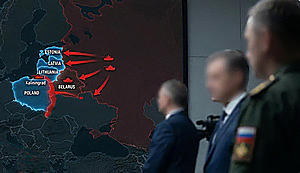
Once the aforementioned force is formed, the “Northeast” Rapid Deployment Corps will focus on defending Poland and the so-called Suwalki Corridor, which runs along the border between Poland and Lithuania and connects Russia’s Kaliningrad region with Belarus. According to many experts, it is there that the main Russian offensive could take place.
Another Rapid Deployment Force will be established in Finland, Norway, and Sweden under the command of NATO’s Multinational Corps “Northern Europe”.
A planned reduction in US troops in the European theater of operations is also set to begin. During the summit, the USA announced that it would conduct an inspection of US forces in Europe over the next six months to determine whether some of them could be withdrawn from Europe. This is intended to free up resources to strengthen the USA’s military presence in the Asia-Pacific theater. The following factors will be taken into account during the relevant assessments:
- the level of threat to Europe posed by Russia;
- combat capabilities and troop strength of the Russian Armed Forces that could be deployed in a war, as well as the forms and directions of their operations;
- forces required to counter aggression;
- European countries’ loyalty to the USA, including during the Iran campaign.
In the process of making decisions on these issues, the US Department of Defense will consult with Congress and NATO allies.
Washington has, in fact, agreed to proceed according to a plan that suits Europe. First, the reduction of the USA’s presence in the European theater of operations will take place in a controlled manner – that is, not chaotically, as is currently the case. Second, the procedure for troop withdrawal and its parameters will be coordinated with Europe and individual European countries, and the process itself will be conducted in a way that does not undermine their defense capabilities. In other words, the plans to reduce US troops in Europe are objective and irreversible and will not be revised following a change in administration in the United States. This was finally agreed upon at the NATO summit.
The decision made at the NATO summit in The Hague to increase defense spending by Alliance member states to 5% of GDP has been confirmed. A significant portion of these funds will go toward the production of weapons and military equipment.
At the summit in Ankara, agreement was reached on new military equipment and hardware procurements totaling $50 billion, as well as on expanding collective production capacity and cooperation with industry to foster innovation. An agreement was reached on further efforts to remove barriers to trade in defence products among NATO partners.
At the same time, the United Kingdom, the Netherlands, Finland, and Poland agreed to establish a new Multilateral Defence Mechanism (MDM). The goal is to simplify procedures for financing defense projects, jointly procure weapons, and ensure favorable conditions for the development of allies’ military capabilities. One of the priorities is continued support for Ukraine.
NATO leaders and member states have recognized that Ukraine has made a significant contribution to transatlantic security and expressed their unanimous support for our country in defending its freedom, sovereignty, and territorial integrity. They believe that such support is fair, predictable, and sustainable in the long term. In this context, Ukraine was identified as one of the key components of the European and Euro-Atlantic security system. NATO leadership considers it the front line of such a system in the southeastern direction and a powerful force for military deterrence against Russia. Summit participants agreed that Ukraine effectively shields the southern parts of Poland, Hungary, Slovakia, the Czech Republic, Romania, and Bulgaria from potential Russian attacks on land and in the air.
As part of Ukraine’s participation in NATO Joint Forces exercises, the country is being integrated into the Alliance’s military structure. At the summit, NATO leadership decided to involve Ukraine in the planning of the exercises in which it will participate. This year, these will include Steadfast Pyramid and Pinnacle, Noble Jolt, and Steadfast Duel. During these exercises, participants will work on conducting joint military operations, functioning of command-and-control systems, and collective deterrence mechanisms. Previously, only NATO member states were involved in such exercises. An exception has been made for Ukraine.
Ukrainian representatives will also participate in the LCI-X exercises, during which air defense systems will be refined. They will play the role of a simulated adversary (Red Team), employing the tactics used by Russian aviation and UAVs. This will make it possible to create scenarios that are as close to reality as possible, based on Ukraine’s combat experience. Ukraine’s involvement in planning the exercises will allow for the integration of practical experience from modern warfare directly into the exercise programs.
For their part, NATO and the EU serve as operational and strategic rear areas for Ukraine. Logistical hubs are located in Poland and Romania, through which weapons are supplied to meet the needs of our country’s Defence Forces. Gas pipelines and power lines run through Hungary and Slovakia, enabling Ukraine to receive gas and electricity from Europe. Furthermore, Ukraine’s defence industry is already, in fact, integrated into the European defense industry. Moreover, it is not only a consumer of technology but also a supplier of it. This refers to unmanned aerial vehicles. As is well known, Ukraine is one of the world leaders in this field. It could also become a hub for the consolidation of European missile technologies, which would enable Europe to become independent of the United States in the production of ballistic missiles and missile defence systems. Work in this direction is ongoing. For example, US President Donald Trump agreed that licenses for the production of missiles for the Patriot air defense system could be transferred to Ukraine. At the same time, on the sidelines of the summit, the Ukrainian company Fire Point and the German company HENSOLDT signed a memorandum of understanding regarding the joint integration of their components into the FREYJA air defense system, which is designed to intercept ballistic missiles. And as part of the Drone Deal program, Ukraine signed agreements with Estonia, Denmark, and the Netherlands on the production of UAVs. Another agreement was signed with Germany on the joint production of Bars drone missiles for the needs of the Defence Forces of Ukraine. The project will be funded by the German side.
It should be noted that European NATO and EU members are Ukraine’s main financial donors. At the summit, NATO leadership confirmed plans to allocate $80 billion in 2026 to purchase weapons for Ukraine and train Ukrainian military personnel. Of this amount, $32 billion will come from the defence component of the EU loan, and $48 billion will be provided on a bilateral basis. The same amount will be allocated to Ukraine in 2027.
Separately, Norway has announced that it is allocating $300 million to strengthen Ukraine’s air defence. Specifically, these funds will be used to purchase missiles for Patriot systems. Canada, meanwhile, has announced a new large-scale military aid package for Ukraine totaling $640 million. It has also invited Ukraine to become a founding member of the Defence, Security, and Resilience Bank (DSRB). Albania, Belgium, Greece, Latvia, Luxembourg, Romania, and Turkey have joined this initiative. The goal is to raise $134 billion.
The prospects of Ukraine’s NATO membership were not actively discussed at the summit. At present, everyone realizes that this is impossible to achieve amid the war. This is especially true given that the United States is generally opposed to Ukraine’s accession to the North Atlantic Alliance, as it views this as the main cause of the Russian-Ukrainian war. According to NATO Secretary General M. Rutte, in the current situation, Ukraine’s military-technical cooperation with the Alliance is more relevant than its accession to it. Therefore, NATO will expand opportunities for industrial cooperation and joint production with Ukraine.
Security guarantees that the Alliance can provide to our country once the war is over will constitute a separate area of cooperation between Ukraine and NATO within the framework of the new European and Euro-Atlantic security system. The United States may also join in providing these guarantees. Indeed, Donald Trump expressed America’s readiness to close the skies over Ukraine in the postwar period.
Unlike at the previous NATO summit, the topic of resuming peace talks between Ukraine and Russia was hardly raised at all. It is clear that at this stage, no one is seriously counting on this anymore. US President Donald Trump was the exception. He once again expressed confidence that Ukraine and Russia could cease hostilities and move toward dialogue in the very near future. According to him, the USA, Ukraine, and Europe can, through joint efforts, force Moscow to make peace. In this regard, D. Trump endorsed Ukraine’s operation to strike Russia’s oil and gas infrastructure, which is effectively being carried out with the support of the USA and Europe. He also pointed out the effectiveness of the Ukrainian Defence Forces and Ukrainian soldiers, who skillfully use American weapons and demonstrate courage on the battlefield.
The shift in the USA’s attitude to Europe – from de facto confrontation to constructive cooperation – has also led to a virtual end to internal divisions within NATO. This was evident in the proceedings of the aforementioned summit. Despite the pro-Russian stance of the leaders of Slovakia, Bulgaria, and, to some extent, the Czech Republic, they did not obstruct NATO’s decisions to provide assistance to Ukraine. Moreover, the Czech Republic joined the PURL program, which provides for the purchase of weapons from the USA using European funds. Previously, Russia’s supporters in NATO and the EU had relied on D. Trump, who backed them in their efforts to divide and weaken Europe. Now they lack such support. Consequently, they have scaled back their anti-Ukrainian activities.
The summit also discussed other issues, particularly regarding the situation in the Balkan Peninsula and the Middle East. However, these did not directly concern Ukraine.
So, the NATO summit in Ankara demonstrated that NATO’s unity on issues of Euro-Atlantic security is strengthening. Russia’s aggressive foreign policy is considered the main source of threats to this unity. This refers, first and foremost, to its war against Ukraine and preparations for a possible attack on Europe. As part of efforts to counter these and other threats to NATO allies, the Alliance’s leadership is working to build a new European and Euro-Atlantic security framework that calls for a redistribution of responsibilities between the United States and Europe. There are already tangible results in the implementation of these plans.
Ukraine is a key component of the European and Euro-Atlantic security architecture. With this in mind, NATO provides Ukraine with comprehensive assistance. This assistance is long-term in nature and includes funding to strengthen our country’s defence, the transfer and joint production of weapons, as well as participation in the training of Ukrainian military personnel. At the same time, through joint exercises, Ukraine is integrating into NATO’s military system.
For now, Ukraine’s accession to NATO is not on the agenda. However, it is already interacting with the Alliance on par with full NATO members. Currently, with the support of the United States and NATO, Ukraine is conducting a successful operation to compel Russia to make peace. It is creating the conditions for ending the war in a manner that serves our country’s interests.
Yurii Ilchenko,
Institute for Global Politics